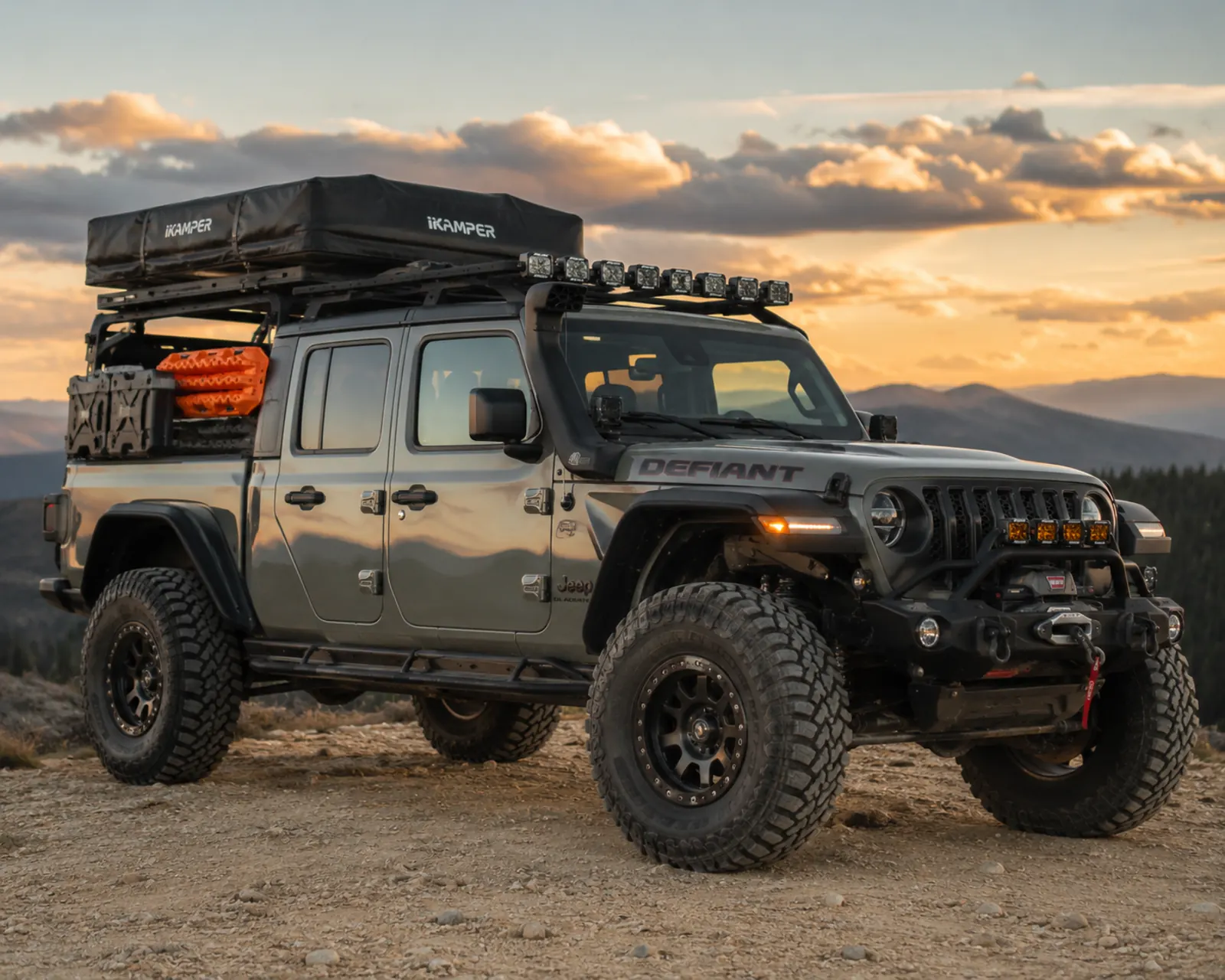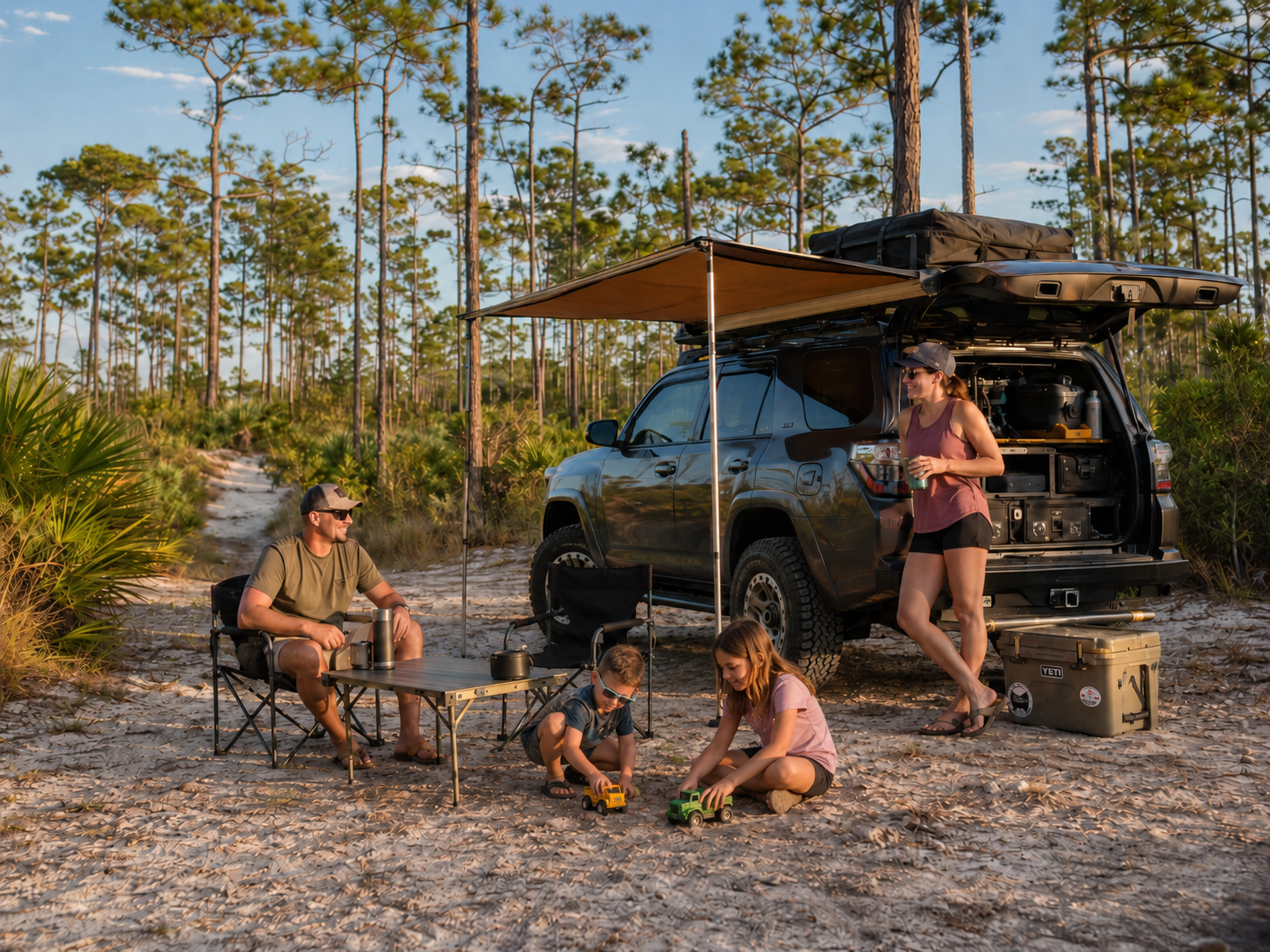
Overland projects spec'd for Mountain West use don't always translate to Florida. The terrain is flatter, the heat is heavier, the trails are shorter between resupply, and the sand is everywhere. Some gear is non-negotiable; some is dead weight.
What earns its place
- 12V fridge with proper insulation — heat eats coolers fast
- Awning with sun-rated fabric and easy single-person deploy
- Onboard air, sized for airing down and back up multiple times
- Traction boards for sand recovery — used more than winches in this state
- Trail-rated lighting that handles humidity without fogging
What's usually overkill
- Massive long-range fuel tanks — Florida loops are short between fuel
- Heavy steel armor on projects that never see rock
- Snow-rated sleeping systems — usually a ventilation problem here
Heat is the gear killer in Florida overlanding. Fridge ventilation, awning shade coverage, and 12V power for fans matter more than most projects assume.
Beach access changes the project
If your project will see beach time, salt and sand drive maintenance more than trail miles do. Sealed wiring, stainless hardware where possible, and post-trip rinses with attention to brakes and bearings make the difference between a project that lasts and one that corrodes.
Power planning, simplified
A 12V fridge, fans, lighting, and charging is realistic on a single secondary battery with a DC-DC charger for most weekend trips. Solar earns its place on multi-night stays. Inverters and full house-battery setups are over-spec'd for typical Florida loops.
- Recovery boards rated for sand
- Tire deflators preset for sand pressure
- Onboard air with high duty cycle
- Bug netting compatible with your sleep system
- Awning with shade walls for midday heat
Overlanding Gear & Vehicle Upgrades
Sleep systems, drawers, racks, awnings, and power integrated cleanly.
VIEW SERVICE