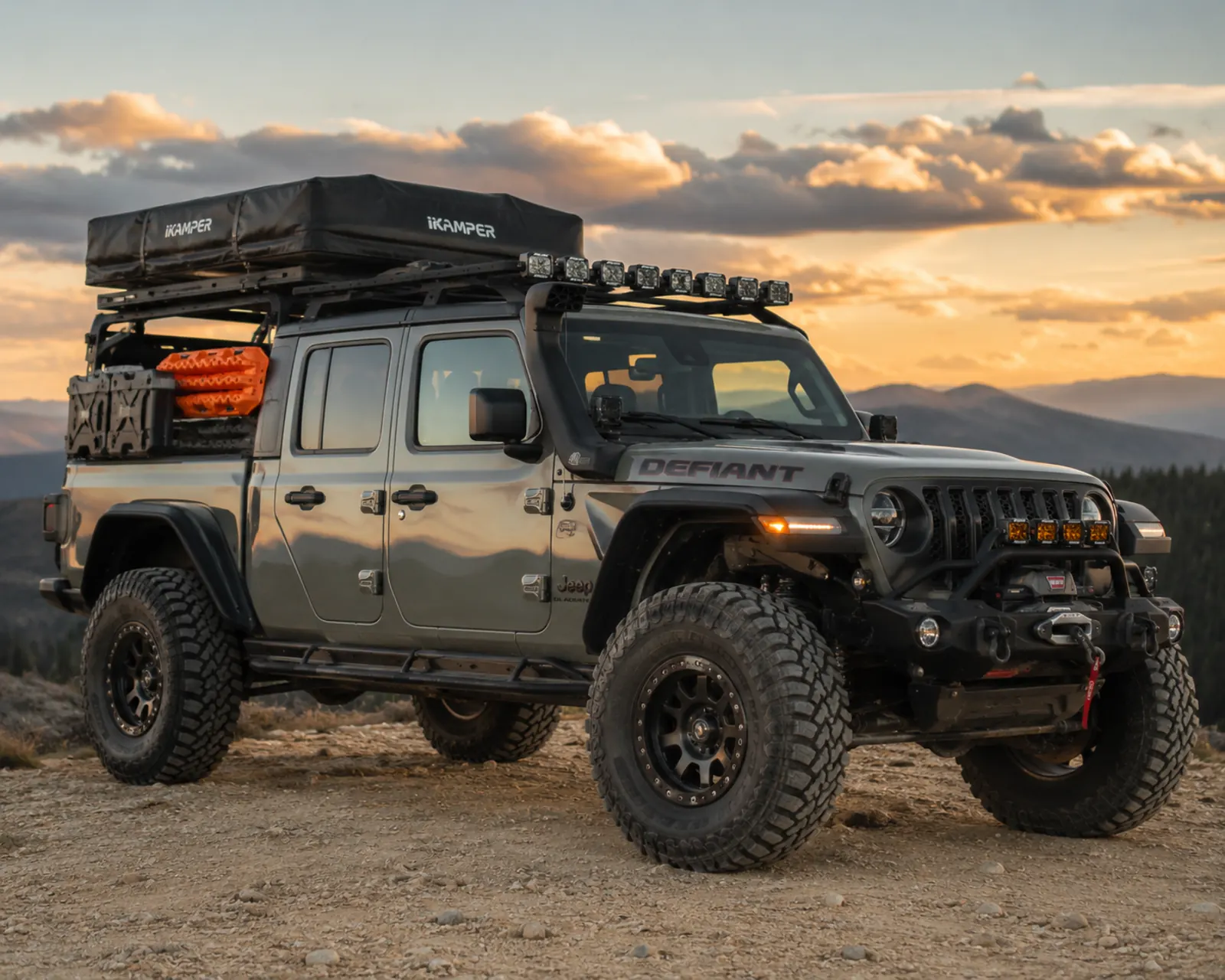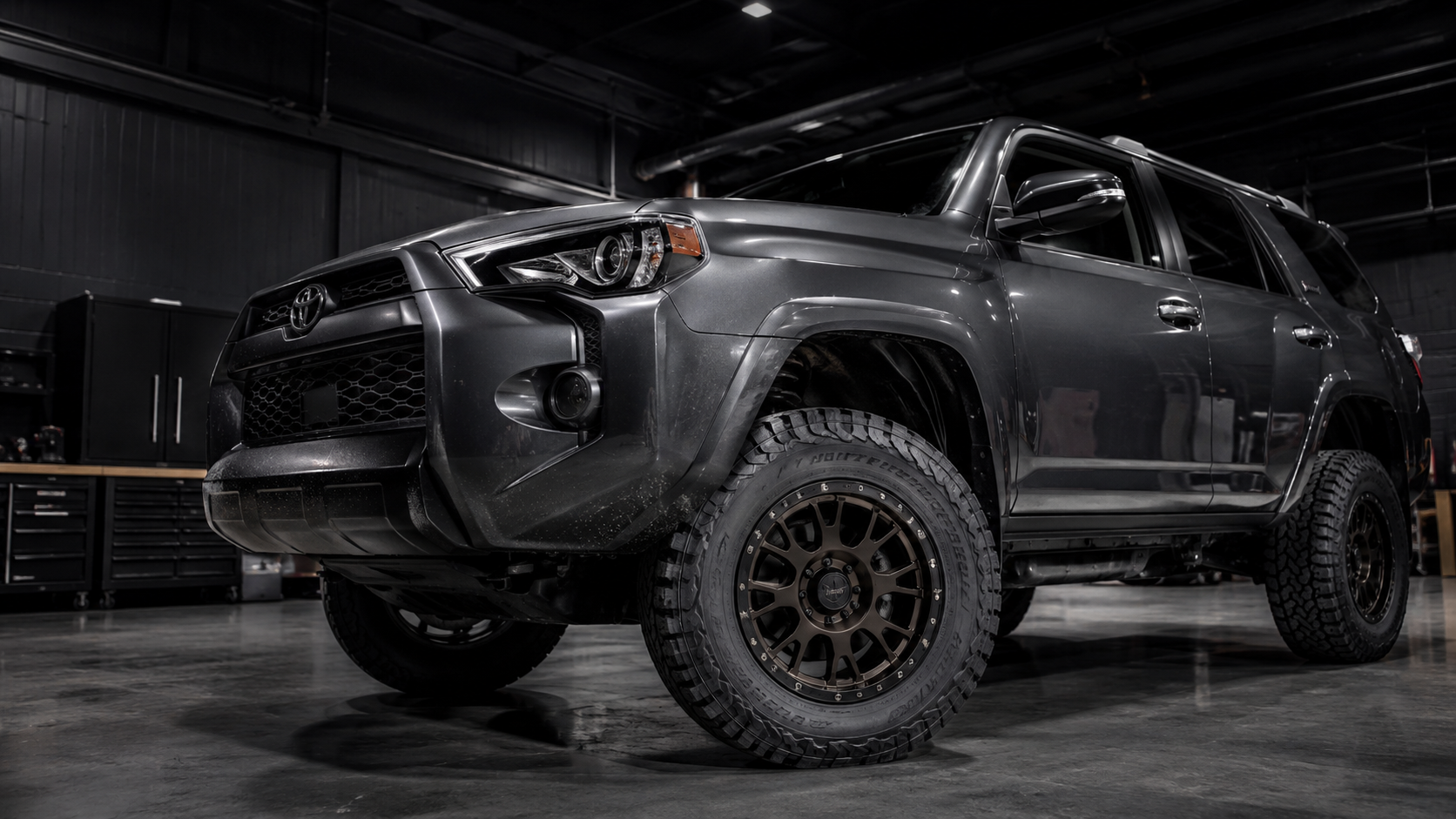
"Will 35s fit?" is the wrong question. The right question is: at what offset, on what wheel width, with what suspension, and with what amount of trimming — yes or no, then how does it drive after that?
Offset and backspacing in one paragraph
Offset is the distance between the wheel's mounting face and its centerline. A lower (or negative) offset pushes the wheel out, which gives bigger tires room to clear suspension but pushes load onto the bearings and changes steering feel. Backspacing is the same math from a different reference point — the back of the wheel to the mounting face.
The three places tires rub
- Inner fender liner at full lock (front)
- Frame, control arms, or sway bar at full compression
- Rear wheel well at full articulation or high load
Trimming, bump-stop adjustment, and offset changes solve different rubbing problems. A wheel that's pushed out won't fix frame rub; a bumpstop won't fix fender liner rub at full lock.
The cleanest fitment is usually the one with the highest offset (least poke) that still clears everything. More poke is more rubber thrown on the doors and more load on bearings.
Load rating is not optional
On full-size and mid-size trucks, the wheel's load rating has to meet the vehicle's GAWR. A wheel rated below the axle weight can crack, especially with offroad impacts. This is not a place to save money.
Aggressive tread costs you on the highway
Mud terrain tires are louder, wear faster, lose traction in the rain sooner, and hurt fuel economy compared to all-terrains. They earn their place on a true trail rig — on a daily that sees occasional trail use, a good all-terrain almost always wins.
- Confirm offset matches your suspension and lift
- Verify load rating against GAWR
- Check tire clearance at full lock and full compression
- Plan for regearing if going up more than one tire size
- Budget for an alignment after install
Wheels & Tires
Packages spec'd around load, ride quality, and the trails you actually run.
VIEW SERVICE